Most homeowners never think about their outlets until something weird happens.
The hair dryer suddenly trips the breaker. The garage outlet stops working after rain. The bathroom receptacle feels warm when you unplug something.
That's usually the first sign.
And honestly, a lot of older homes around Bastrop, Smithville, and parts of Austin still have outdated outlets in places where modern code now requires GFCI protection.
The dangerous part?
Most people have no idea.
If you've been wondering whether your Texas home actually has the GFCI outlets it needs, this article will walk you through the five rooms where they matter most, what Texas code requires, and how to tell if your home needs an upgrade.
What a GFCI Outlet Actually Does
A GFCI outlet is designed to stop electrical shock before it becomes deadly.
Simple as that.
The full name is Ground Fault Circuit Interrupter. But nobody really says that outside inspections and electrician paperwork.
Here's the real-world version:
If electricity starts flowing somewhere it shouldn't — through water, a damaged appliance, metal plumbing, or a person — the outlet shuts the power off almost instantly.
Usually in about 1/40th of a second.
Fast enough to stop a serious shock.
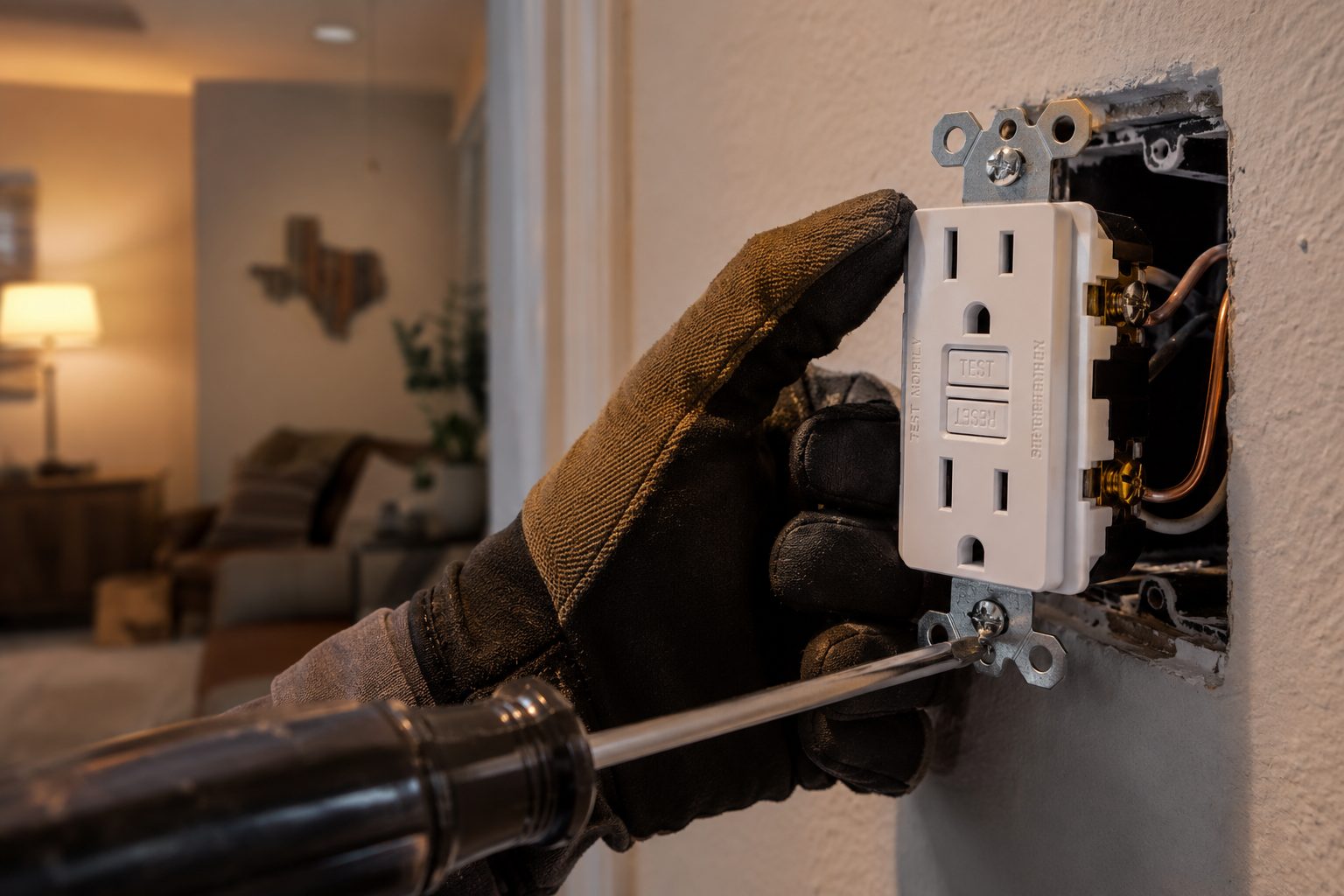
You've probably seen them already. They're the outlets with the little TEST and RESET buttons.
And if your bathroom, kitchen, garage, or patio outlets don't have those buttons? There's a decent chance the protection is outdated or missing entirely.
Especially in homes built before the late 90s.
GFCI vs AFCI — People Confuse These Constantly
Honestly, even homeowners who know what a GFCI outlet is usually mix this up.
GFCI and AFCI are not the same thing.
A GFCI protects people from electrical shock. Mostly around water.
An AFCI protects your house from electrical fires caused by damaged wiring hidden inside walls.
Quick version:
- GFCI = shock protection
- AFCI = fire protection
Bathrooms, kitchens, garages, outdoor outlets? Usually GFCI territory.
Bedrooms and living rooms? More likely AFCI requirements there.
A lot of newer Texas homes have both types working together now depending on the circuit.
And yes, homeowners absolutely confuse them during remodels.
We had a customer near Georgetown who replaced several outlets himself after watching YouTube videos and thought AFCI breakers meant he didn't need GFCI outlets anymore.
Easy mistake.
But they protect against completely different problems.
1. Bathrooms
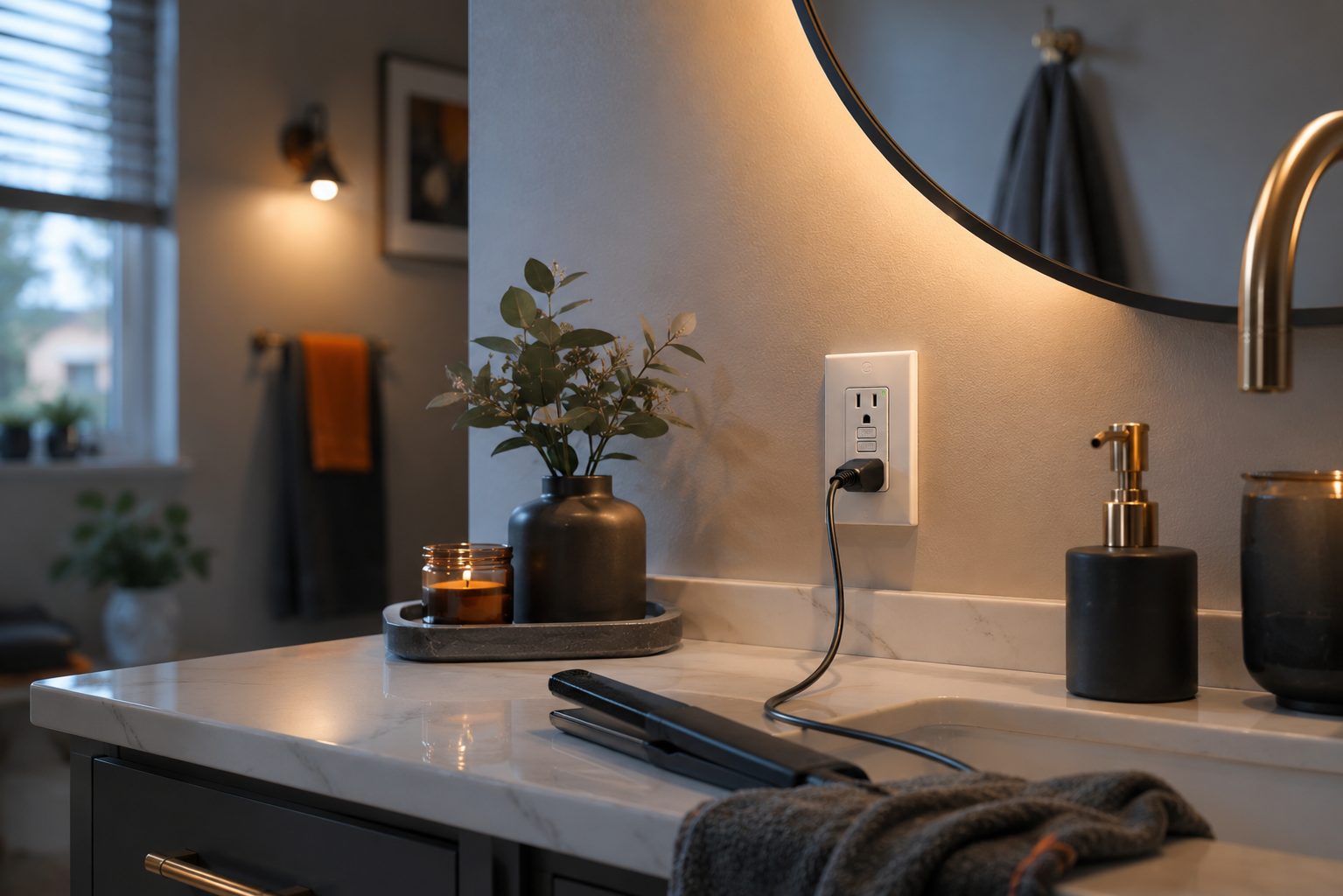
Bathrooms are still the highest-risk room in the house when it comes to electrical shock.
No question.
Wet floors. Bare feet. Hair dryers. Curling irons. Electric razors. Humidity. Metal plumbing.
Everything about a bathroom increases conductivity.
That's why bathroom GFCI outlet requirements exist in the first place.
Texas code requires receptacles near sinks to have GFCI protection. And yet we still walk into homes every week where the bathroom outlet is completely standard.
Especially homes built before the mid-90s.
One homeowner in Bastrop called us after her outlet sparked while unplugging a hair dryer before work one morning.
Scared her pretty badly.
Turns out the receptacle was over 30 years old, loose inside the box, and had no GFCI protection at all.
The repair itself only cost around $145.
Cheap compared to an ER visit.
And honestly, this is what surprises people most: dangerous outlets usually still work perfectly fine right up until they don't.
2. Kitchens
Kitchens are basically controlled electrical chaos.
Coffee makers beside sinks. Blenders on wet counters. Toaster cords hanging behind appliances. People unplugging things with wet hands.
Every kitchen has this stuff happening constantly.
That's why kitchen GFCI outlet requirements became stricter over the years in Texas homes.
Any outlet within 6 feet of a sink should have GFCI protection. Modern code can also include:
- Kitchen islands
- Peninsula outlets
- Dishwasher receptacles
- Countertop appliance circuits
And look, here's the truth.
A lot of kitchen electrical problems come from small things homeowners ignore for years.
Loose plugs. Burn marks around outlets. Cheap DIY replacements. Frayed appliance cords.
We opened a kitchen outlet in an older Smithville house last year and found melted insulation inside the box from a loose connection behind the receptacle.
From the outside?
Looked completely normal.
The homeowner only noticed because the coffee maker kept randomly losing power.
That repair ended up around $190 because the wiring inside the box needed to be rebuilt.
Still much cheaper than what overheated wiring can turn into.
3. Garages & Unfinished Basements
This one surprises homeowners all the time.
People think garages are dry spaces.
Not really.
Concrete naturally holds moisture. Texas humidity gets everywhere. Add lawn equipment, battery chargers, mini fridges, power tools, extension cords, or holiday lights and suddenly the risk climbs fast.
Garage GFCI outlet protection is fully required by code now.
But honestly, most older garages around Central Texas still don't have it.
We recently worked on a home near Bastrop where the homeowner plugged Christmas lights into the same garage outlet every December for years.
One rainy weekend the breaker started tripping nonstop.
The outlet box had moisture damage and corrosion inside so bad the metal contacts were practically green.
Repair cost? About $160.
Could've been worse. A lot worse.
Especially because overloaded garage outlets are one of those things homeowners rarely inspect until something fails.
The outlet behind the freezer. The one hidden behind storage bins. The extension cord that's been there since 2017.
Stuff nobody looks at.
4. Outdoor Outlets
Texas weather is rough on outdoor electrical equipment.
Heat. Rain. Humidity. Sprinklers. Dust. Bugs finding their way into outlet boxes somehow.
Outdoor receptacles deal with conditions indoor outlets never see.
That's why modern code requires:
- GFCI protection
- Weatherproof in-use covers
Both matter.
This includes:
- Patio outlets
- Front porch receptacles
- Pool-area outlets
- Backyard kitchens
- Soffit plugs for holiday lights
And here's something most homeowners don't realize:
An outdoor outlet can still technically "work" while already being dangerous internally.
We've replaced exterior receptacles in Austin-area homes where the outlet face looked perfectly fine, but once opened up the inside was corroded from years of moisture exposure.
That kind of damage slowly builds over time.
Usually unnoticed.
5. Laundry Rooms & Wet Bars
Laundry rooms got added to GFCI requirements later than bathrooms and kitchens.
So homes built before 2014 often still don't have proper protection there.
But think about what's happening in a laundry room:
- Water lines
- Washing machine vibration
- Large electrical loads
- Utility sinks
- Humidity
That's a pretty ideal setup for electrical faults.
Wet bars create similar issues.
Mini-fridges. Ice makers. Sinks. Countertop outlets all packed into a small space.
And honestly, these areas get ignored because people aren't staring at the outlets every day.
Nobody notices the receptacle behind the washer until the machine suddenly stops working.
How to Tell if Your Outlets Are Already GFCI
First step is easy.
Look for TEST and RESET buttons on the outlet.
No buttons usually means standard receptacle.
But there's one important catch.
Some homes use GFCI breakers inside the electrical panel instead. That means one protected outlet upstream can protect multiple outlets downstream.
So don't assume immediately.
Quick test:
- Press TEST on a nearby GFCI outlet
- See whether nearby outlets lose power
- Press RESET
If you're unsure, it's worth having somebody check properly.
Especially in older Texas homes where electrical updates happened little by little over decades.
One bathroom got remodeled. The kitchen didn't. Garage wiring stayed original. Then somebody added outdoor outlets later.
We see mixed electrical setups constantly around Central Texas.
What It Costs to Upgrade
Most homeowners assume electrical work automatically means thousands of dollars.
Sometimes, sure.
But GFCI upgrades are actually one of the more affordable safety improvements you can make.
Typical pricing around Bastrop County:
- Single GFCI outlet replacement: usually $130–$200
- Multi-room upgrades: roughly $400–$900
- Full electrical safety walkthrough: free if you book it with us, usually $75–$150 elsewhere
The final price depends on:
- Wiring condition
- Accessibility
- Grounding
- Electrical panel setup
- Age of the home
And honestly, older houses sometimes uncover hidden issues once the outlet gets opened up.
Loose wiring. Melted connections. Aluminum branch circuits. No grounding wire at all.
We opened one garage outlet near Georgetown that physically could not fit a modern GFCI receptacle because the old electrical box was too shallow.
The homeowner originally expected a quick $150 outlet replacement.
Instead, the old box had to be replaced too because the wiring setup dated back decades.
Final cost was around $340.
Still cheaper than ignoring it another five years.
Hidden Costs That Surprise Homeowners
This is the part people don't usually expect.
Sometimes the outlet itself isn't the real issue.
The wiring behind it is.
Older homes around Bastrop and Smithville occasionally still have:
- Missing ground wires
- Overstuffed electrical boxes
- Aluminum wiring connections
- Brittle insulation
- Improper DIY splices hidden behind walls
And look, here's the truth.
Most of those problems stay invisible until somebody opens the box.
That's why electrical estimates sometimes change after inspection. Not because contractors are trying to upsell everything. Sometimes the system genuinely isn't safe once you see what's behind the outlet cover.
Honestly, the scary jobs are the ones where everything "looks normal" from outside.
Texas GFCI Code Quick Reference
Here's the simple version most homeowners want:
- Bathrooms — required since 1975
- Outdoor outlets — required since 1973
- Garages — required since 1978
- Kitchens near sinks — required since 1987
- Crawl spaces & unfinished basements — required since 1990
- Laundry rooms — required since 2014
That's why outdated electrical wiring is still common in older Central Texas homes.
The rules changed gradually over decades.
A lot of houses never fully caught up.
What About AFCI Protection?
Quick clarification because people search this constantly.
GFCI and AFCI are different protections for different risks.
GFCI helps prevent electrical shock around water.
AFCI helps prevent electrical fires caused by damaged or arcing wiring behind walls.
Modern Texas homes often require AFCI protection in:
- Bedrooms
- Living rooms
- Hallways
- Dining rooms
So if your electrician mentions AFCI breakers during an upgrade, that doesn't mean they're trying to sell random extras.
Different problem. Different protection.
Not Sure Which Outlets Need Upgrading?
Honestly, most homeowners don't know.
That's normal.
At Rinelli Services, we do free walk-through outlet audits across Bastrop, Smithville, Georgetown, and nearby Central Texas areas.
Usually takes about 15 minutes.
We'll tell you:
- Which outlets already meet code
- Which ones should be upgraded
- Whether protection already exists at the panel
- And whether there are any larger wiring issues worth paying attention to
No pressure.
No fake "your house is a disaster" sales pitch.
Just clear answers.
We can usually fit a walkthrough in within 48 hours. Most weeks we have same-week availability in Bastrop and Smithville.
Call us at (512) 907-0702 or visit our contact page to schedule a free outlet audit. You can also learn more about our electrical services.