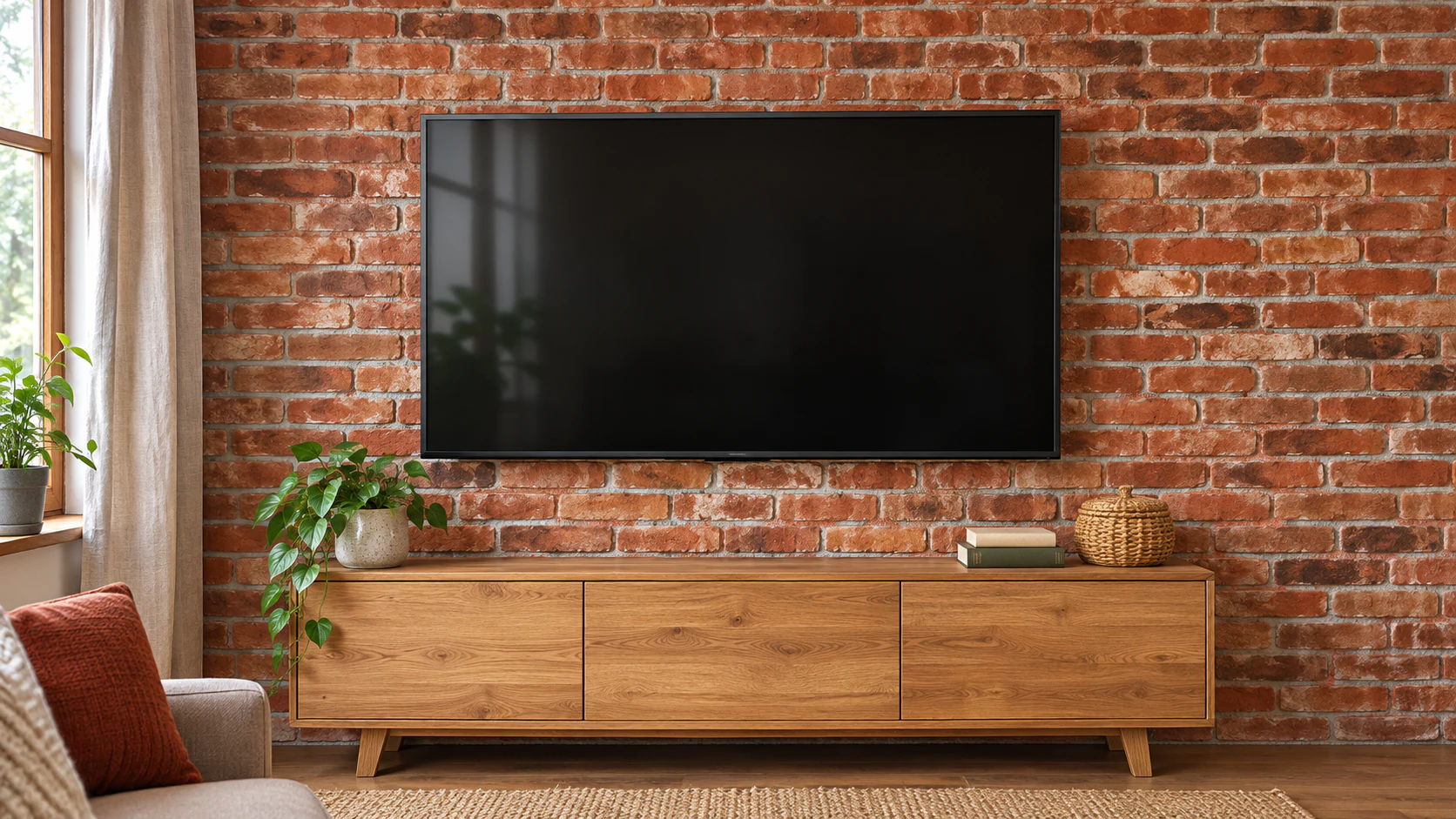
Sometimes a TV can be mounted on brick or stone, but the answer depends on the actual wall construction, the TV and bracket specifications, and the installation location. The visible surface alone isn't enough to approve a mounting plan. Before requesting TV mounting in Bastrop, send Jesse & El clear wall photos, both model numbers, and your plan for power and other cables.
Brick or stone isn't a complete description of the wall
Some homes have substantial masonry construction. Others have a thin decorative brick or stone veneer applied over another wall material. Manufactured stone, natural stone facing, and masonry with different mortar conditions can all appear similar in a photograph. Their appearance does not establish how the wall supports a mounted load.
For brick wall TV mounting in Bastrop, the question is what the bracket will actually attach to and whether the proposed attachment is appropriate. The supporting structure may be behind the decorative surface, or the visible material may itself be part of the wall assembly. A worn, cracked, loose, or previously repaired surface may need separate review.
There isn't a universal drill pattern or fastener list that applies to all of those conditions. The wall must be evaluated alongside the selected mount's instructions and the verified mounting surface. If construction details are uncertain, they need to be clarified rather than assumed.
Look beyond the finish: solid masonry versus decorative veneer
It's tempting to assume a stone or brick feature wall is strong because the surface feels hard. Hardness and suitability for supporting a television aren't interchangeable.
A decorative veneer is not necessarily designed to receive the same installation as a suitable structural substrate. Some surfaces have uneven faces, deep mortar joints, or a layer of material that may complicate how a bracket sits. The relevant question is how the entire assembly is constructed and supported, not simply whether the outer surface is brick-colored or made of real stone.
The TV and mount must be reviewed together
Before buying mounting hardware, find the exact TV model number. It is usually listed on the manufacturer's label and in your purchase records. Record the model of the bracket you already own or are considering, too.
The review includes the TV's weight and mounting-interface requirements, the bracket's compatible specifications, the manufacturer's instructions, and what the selected bracket requires from the wall. Those details matter more than a general statement that a mount “fits most TVs.”
Rinelli already has a separate guide explaining fixed, tilting, and full-motion TV mounts. This article is about the different decision: whether the proposed brick or stone wall is an appropriate mounting location at all.
Is a TV above a fireplace a good idea?
A fireplace can seem like the obvious focal point, especially when the room has a stone surround and limited open wall space. But TV mounting above a fireplace deserves its own review.
Start with heat exposure and the installation guidance for both the TV and fireplace. Different appliances and fireplaces have different operating conditions and clearance requirements, so don't rely on a single “safe distance” copied from another home's layout.
Viewing comfort matters as well. A screen positioned high above a mantel may be less comfortable to watch from a typical sofa, and reflections may change throughout the day. There may also be limited cable access or uncertainty about the materials behind the surround.
Take photos that show the entire fireplace, mantel, surrounding wall, and usual seating area. Include the TV's intended location and both manufacturers' model details. If the location doesn't satisfy the relevant requirements, a different wall or a console setup may make more sense.
Cable concealment is a separate planning question
A TV can look neat without every cable disappearing inside the wall. Cable options depend on the wall assembly, the position of existing power, the number of connected devices, and what routes are actually accessible.
A painted surface-mounted cable raceway may be a practical option where concealing cables inside masonry is not appropriate or accessible. Low-voltage HDMI or data cable routing is a separate question from providing electrical power. If an existing suitable outlet isn't located where needed, work involving a new or relocated power outlet should be reviewed by a licensed electrician.
Don't plan to run an ordinary TV power cord or extension cord concealed inside a wall cavity. Those are not a substitute for a properly designed electrical solution. Explain whether you want a clean surface route, a low-voltage cable-concealment review, or advice about what separate electrical work might be necessary.
Rinelli's TV mounting service describes its review of suitable brick and stone walls, cable access, and existing outlet conditions. A request for mounting doesn't automatically include an in-wall cable solution or an electrical modification.
Where should the screen go?
Use painter's tape or a paper template to visualize the proposed screen size if that helps. Avoid making permanent marks or attempting exploratory drilling to test the wall. Capture the proposed location in a wide photo so the team can discuss placement in context.
For a brick or stone accent wall, make room for realistic clearances, access to connections, and any change in how the bracket sits against an uneven surface. These questions are best settled before an installation date is confirmed.
What photos and details should you send?
A useful first request includes:
- A wide photo showing the whole wall, nearby furniture, doors, and any fireplace.
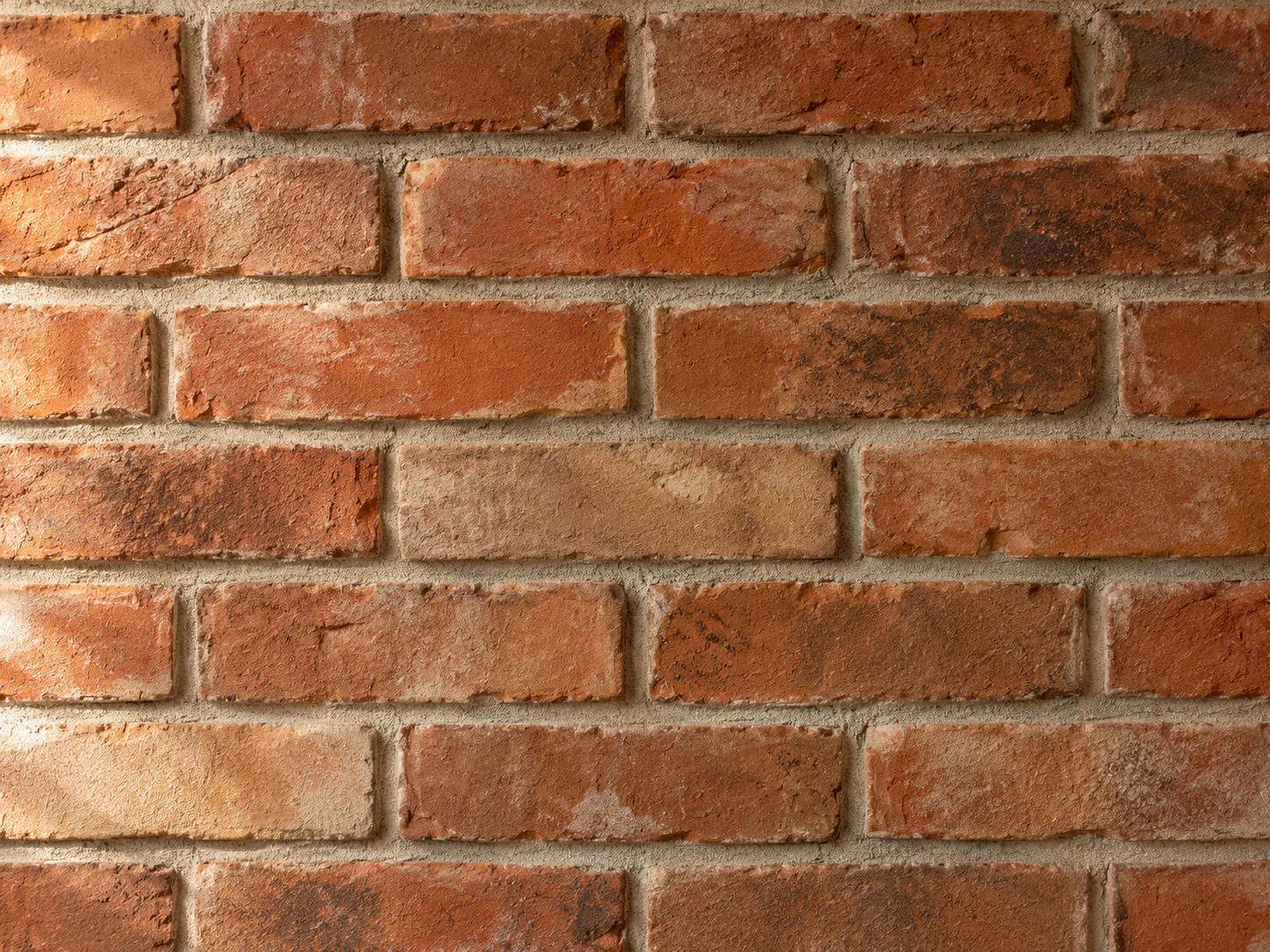
- A close-up showing the brick, stone, mortar, and surface condition.
- The TV's full model number and its manufacturer documentation if available.
- The bracket's model number and instructions, or a note that you haven't bought one yet.
- The preferred screen position, approximate height, and viewing location.
- A picture of existing outlets and a list of devices that will connect to the TV.
- Any known wall history, such as veneer installation, renovation, or previously repaired masonry.
Add your address so Rinelli can confirm the Bastrop service area or review nearby locations. Mention any unusual access conditions before scheduling.
Frequently asked questions
Can every brick or stone surface support a TV?
No. The type and condition of the wall assembly, the attachment location, and the selected equipment all matter. A surface photograph alone cannot establish adequate support.
Can all cables be hidden?
Not necessarily. Accessible low-voltage routing may be possible in some locations, while a surface-mounted raceway may be more suitable in others. New or relocated power connections require separate review by an appropriately licensed electrician.
What should I check before buying a mount?
Find your TV's full model, weight, and mounting requirements, then compare them with the bracket manufacturer's stated compatibility and installation instructions. Share wall information with Jesse & El before purchasing a mount for a challenging surface.
Is mounting above a fireplace always suitable?
No. Heat exposure, manufacturer restrictions, wall support, viewing height, and cable access may make the location unsuitable. Review the specific TV and fireplace documents rather than relying on universal clearance advice.
Ask for a wall and equipment review first
Send a wide wall photo, a close-up of the surface, and your TV and mount model numbers. Add your preferred placement and cable plan, then request TV mounting in Bastrop. Jesse & El can review the proposed scope before confirming whether the installation can be scheduled.