How long do kitchen faucets last? There is no fixed expiration date. A well-maintained faucet can keep working for many years, while heavy use, hard water, mineral buildup, worn seals, or unavailable replacement parts can shorten its useful life. If it still operates smoothly and can be repaired, age alone is not a reason to replace it.
Quick answer: repair an isolated leak when the faucet body is sound and the correct part is available. Consider replacement when a verified repair fails, the body or connections are damaged, several components are failing, or reliable parts are no longer available.
Reviewed and updated October 14, 2026 by Jesse & El, owners of Rinelli Services.
We get this call in Bastrop and across our service area: someone replaced a cartridge and the faucet still drips. Sometimes the new part is wrong or another serviceable component is worn. Other times, recurring leaks, corrosion, and multiple problems show that kitchen faucet replacement is the more cost-effective choice.
Here are five practical signs to check before deciding between faucet repair and replacement.
1. The Drip Came Back After You Replaced the Cartridge
A worn cartridge is a common cause of drips. If the correct cartridge and seals were installed but the leak quickly returns, inspect the valve seat, faucet body, and connections before buying another part.
A new cartridge cannot seal reliably against a damaged or pitted surface. Some models have serviceable components; others integrate them into the faucet body. The model number and parts diagram usually tell you whether another repair is realistic.
Quick test: confirm the model number, verify the replacement part, and check the installation. If the correct repair has already failed or the sealing surface is damaged, replacement usually makes more sense than repeating the same fix.
2. Visible Corrosion, Patina, or Mineral Crust
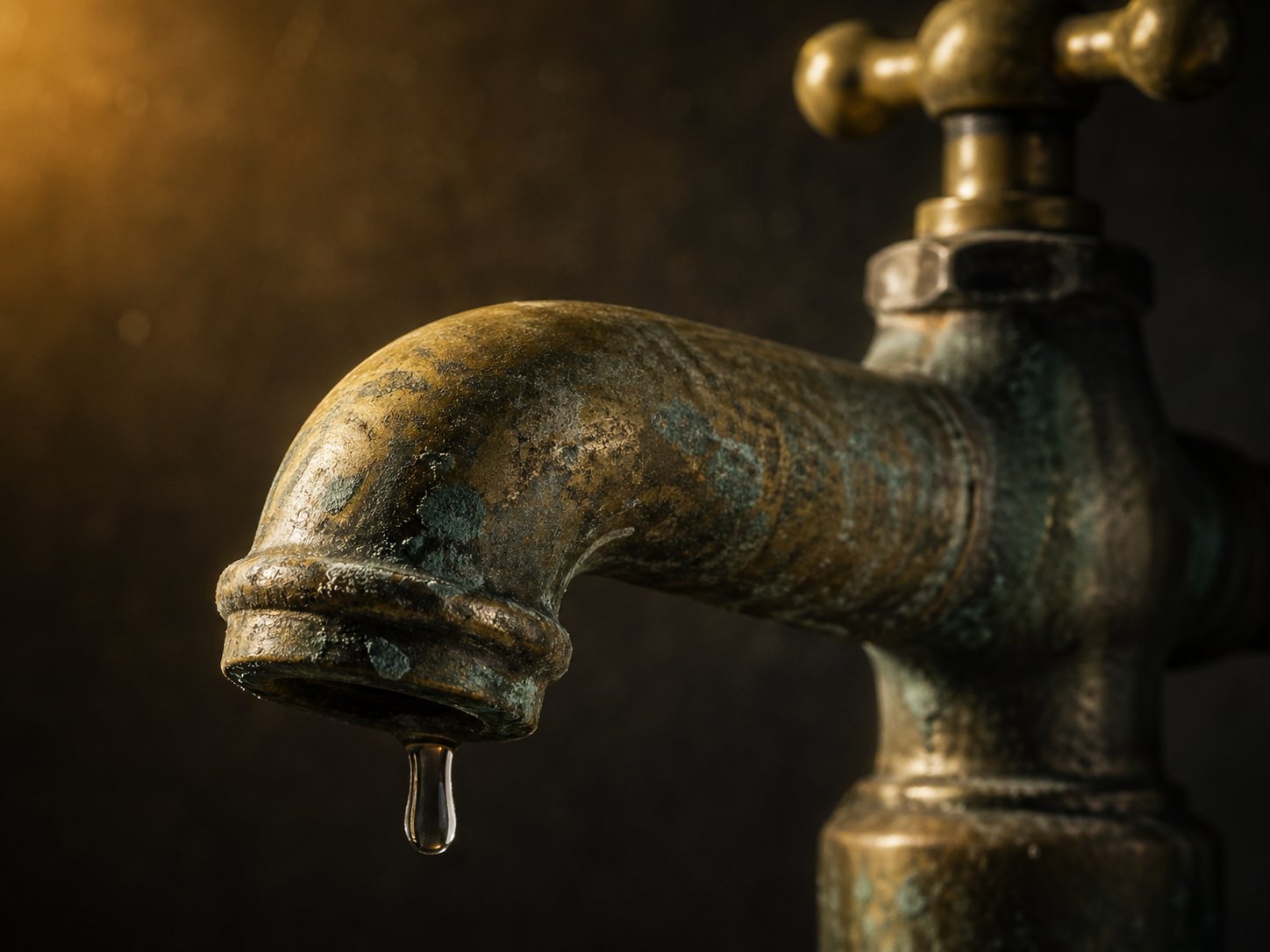
Look at your faucet right now. If you see green-blue patina, white mineral crust around the spout, or pitting in the metal — the faucet's been losing the battle with hard water for a while.
Mineral deposits can build up on faucet bodies, aerators, and spray heads over time. Water quality and mineral buildup vary by home and water supply, so two faucets of the same age may be in very different condition.
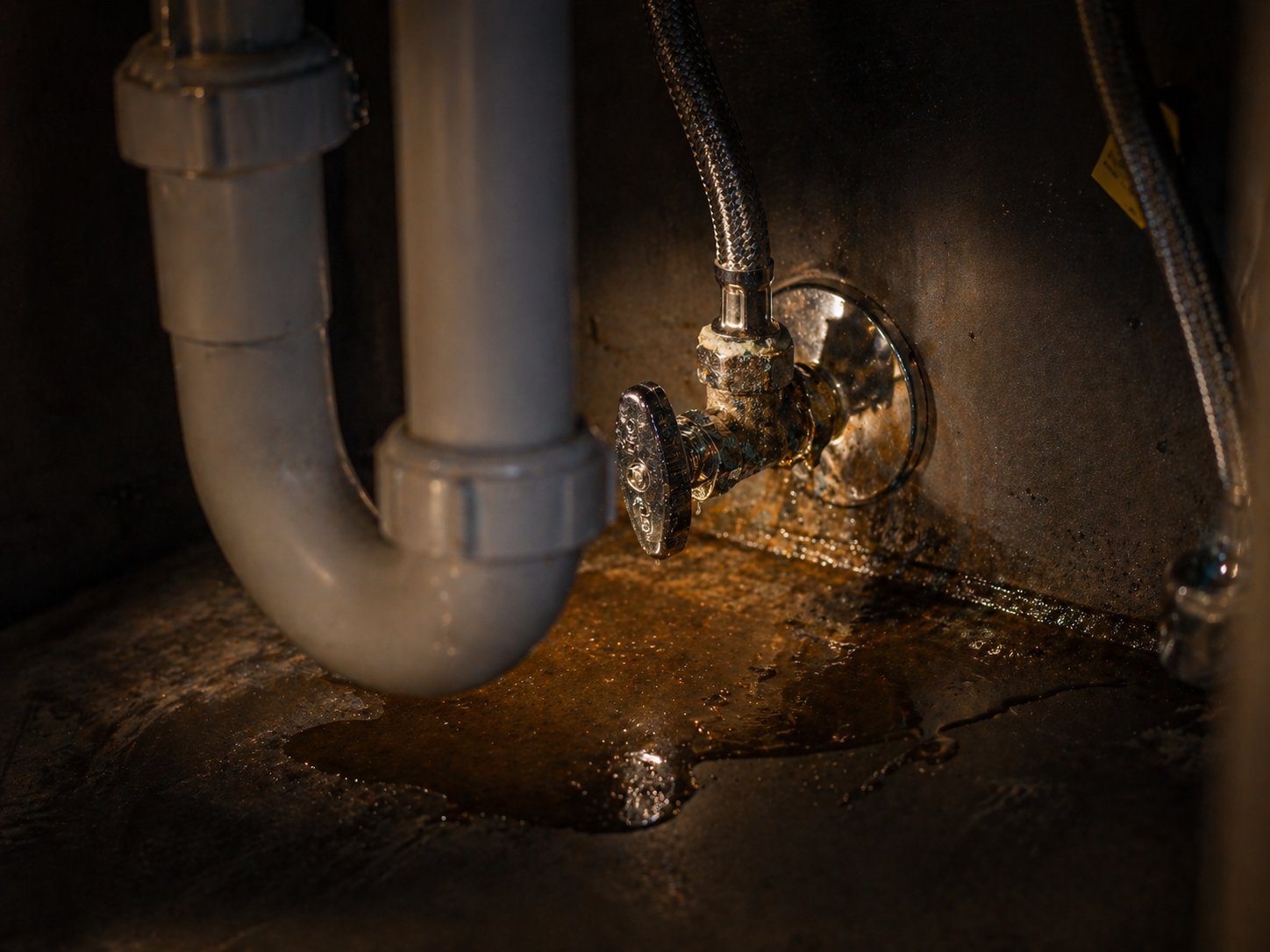
What to look for: any visible corrosion at the base of the spout where it meets the body, around the handle base, or where the supply lines connect underneath. If you can see it, water is finding a way through it.
3. You're Finding Mystery Water Under the Sink
Open your sink cabinet. If the floor of the cabinet is damp, warped, or stained — your faucet is leaking somewhere it shouldn't.
The leak might be at a supply line connection, the base seal where the faucet mounts to the sink, a pull-down hose, or inside the faucet body. The source determines whether a small repair or a full replacement is appropriate:
- Supply line leaks may need a new line, washer, or connection; damaged faucet threads can require replacement.
- Base leaks may come from a loose mount, failed seal, or water traveling from another source.
- Body leaks are more likely to justify replacement when the damaged section is not serviceable.
Our recommendation: shut off the supply lines (twist the small valves under the sink clockwise), dry everything out, and call us. We come out, diagnose, and tell you straight up whether you need a fix or a replacement.
4. Low Water Pressure or Inconsistent Flow
If your faucet's stream went from "strong and even" to "trickle and sputter" — and cleaning the aerator didn't fix it — there's likely sediment, mineral scale, or corrosion inside the faucet body restricting flow.
Start with the manufacturer-approved cleaning method for the aerator or spray head. Some brands recommend a diluted vinegar solution for mineral buildup, but finishes and components vary, so follow the instructions for your model. If cleaning and a verified cartridge repair do not restore water flow, the restriction may be deeper in the fixture or supply.
One important note: low pressure can also come from a partially closed shutoff valve, a kinked hose, debris in the line, or a whole-home supply problem. Compare nearby fixtures and check both hot and cold flow before blaming the faucet.
5. Parts Are Unavailable and Problems Keep Multiplying
Age becomes important when it is combined with repeated leaks, loose handles, a worn spray hose, corrosion, or replacement parts that are no longer available. A single repairable symptom is different from several failures appearing together.
Manufacturer warranties can be generous, but a warranty is not a faucet lifespan estimate. Before replacing an older fixture, look up the model, confirm whether the needed part is available, and compare the complete repair with installing a supported model whose cartridges and hoses are easy to source.
The best time to plan a replacement is before a recurring leak damages the sink cabinet, countertop, or flooring.
The "fix vs replace" rule of thumb
Repair when the problem is isolated, the faucet body is sound, and the correct part is available. Replace when leaks return after a verified repair, the body or connections are damaged, several components are failing, or no reliable replacement parts exist.
Anything in between? Send us a photo of the faucet, the leak, and any visible model label. We can often narrow down the next step before the visit.
Fixture-level faucet repair
and replacement in Bastrop.
Send the faucet model and photos of the fixture, leak, connections, and shutoffs so Rinelli Services can confirm whether the job fits our fixture-level handyman scope, share current availability, and tell you whether a licensed plumber is needed.
Book Plumbing ServiceWhat to Buy When You Do Replace It
A good replacement is not simply the most expensive model. Prioritize a faucet that fits the sink, has clear installation documentation, and uses parts you can identify later.
- Confirm the hole pattern and clearances — especially with thick countertops, backsplashes, and window sills.
- Check replacement-part support — cartridges, hoses, aerators, and spray heads should have identifiable part numbers.
- Read the warranty terms — coverage differs for residential and commercial use and may not include labor.
- Match the faucet to daily use — reach, handle clearance, spray functions, and ease of cleaning matter more than a long feature list.
Keep the model number, receipt, and parts diagram after installation. That small step makes a future cartridge or hose repair much easier and can help a kitchen faucet last longer.
Should you DIY or call us?
Faucet replacement is one of the easier plumbing DIY projects — if everything goes right. Shut off supplies, disconnect old, install new, reconnect supplies. We've seen plenty of homeowners handle it themselves. But here's where it goes sideways:
- Old shutoff valves that don't actually shut off (very common in older homes)
- Corroded supply lines that crack when you try to remove them
- Mounting nuts under the sink that won't budge
- The new faucet's specs not matching the existing holes
If any of those make you nervous — give us a call. Faucet replacement is one of the common fixture jobs we handle, including the unexpected issues around corroded supplies, worn shutoff valves, and difficult mounting hardware.
Got a dripping faucet, a mystery puddle, or a faucet that's just looked sad for too long? Call us at (512) 907-0702 or send us a message with the faucet model and photos so we can confirm fixture-level handyman scope, current availability, and whether a licensed plumber is needed.
Sources and Further Reading
For homeowner guidance on checking faucet connections, aerators, and other common leak points, see the U.S. Environmental Protection Agency's WaterSense home-maintenance guidance and Fix a Leak resources. These sources support routine inspection and prompt repair; the repair-or-replace decision still depends on the condition and serviceability of the individual fixture.
Kitchen Faucet Lifespan FAQ
How long do kitchen faucets last?
There is no universal expiration date. Water quality, frequency of use, build quality, maintenance, and replacement-part availability matter more than age alone. A faucet that works smoothly and can be repaired does not need replacement just because it is old.
Is it better to repair or replace a kitchen faucet?
Repair usually makes sense when there is one isolated problem and the correct cartridge, O-ring, aerator, or hose is available. Replacement becomes more practical when leaks keep returning, the body is corroded, several problems appear together, or parts are unavailable.
Can mineral buildup shorten faucet life?
Mineral buildup can reduce water flow and interfere with moving parts and seals. Cleaning the aerator or spray head according to the manufacturer's instructions may restore performance; recurring buildup, corrosion, or leaks can point to a larger problem.